
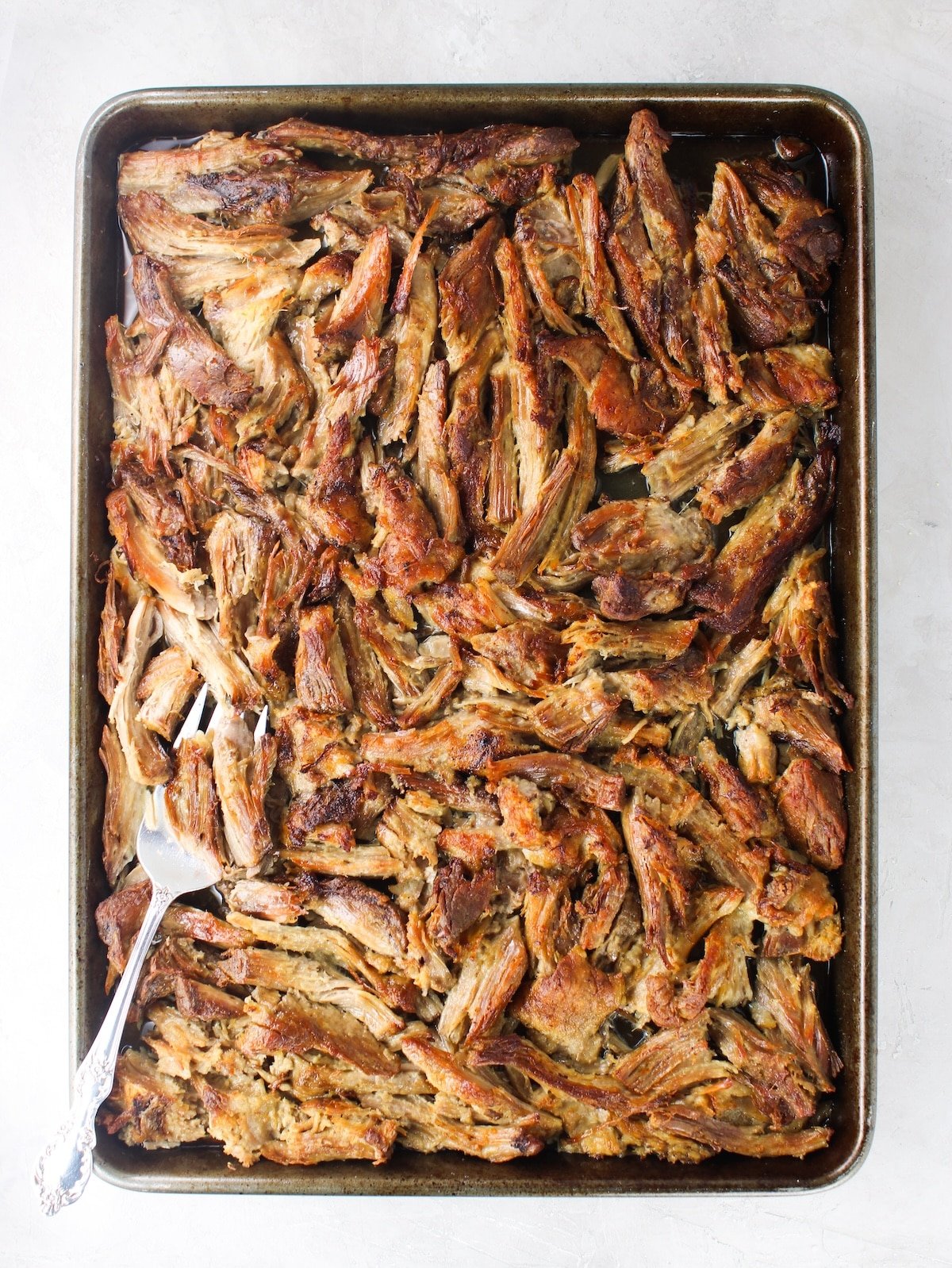
Season a pork shoulder with just salt, pepper, onion, and garlic, then let your slow cooker do the work for 8 hours on low. You'll end up with about 5 pounds of tender, fall-apart pulled pork — gluten-free, keto-friendly, and ready for tacos, sandwiches, carnitas, or the freezer. Jump straight to the crockpot pulled pork recipe, or keep reading for my trimming, shredding, storing, and reheating tips.
I just made this slow cooker pulled pork twice last week — the first time because we love it, and the second time because everyone devoured it and asked for it again the next night. It's the kind of meal you'll want to make extra of, just so you have leftovers on hand. It's been a Sunday meal-prep staple in my kitchen since I first shared it back in March 2020. I've tested it with bone-in and boneless pork shoulder, pork butt (aka Boston butt), and pork picnic roast, on both the high and low settings, and using half a dozen reheating methods — so every tip below comes from actually doing it in my own kitchen, not just writing about it.
This post may contain affiliate links. As an Amazon Associate, I earn from qualifying purchases. Please read my disclosure policy.
Jump to:
- Why You'll Love This Slow Cooker Pulled Pork Shoulder Recipe
- What Cut of Meat to Use
- Pork Shoulder & Pork Butt
- A Few Ingredient Notes
- How to Make a Slow Cooker Pulled Pork Shoulder
- Recipe Tips for Tender Pulled Pork
- Storing and Freezing Pulled Pork
- How to Reheat Pulled Pork Shoulder:
- Flavor Variations and Serving Suggestions
- Sides to Serve With It
- Frequently Asked Questions
- More Cozy Slow-Cooker Recipes to Try:
- Make Ahead Slow Cooker Pulled Pork Shoulder
- 💬 Comments
This post has been updated since its original publish date in March 2020.
Why You'll Love This Slow Cooker Pulled Pork Shoulder Recipe
This is a ridiculously easy, completely hands-off recipe for making a big batch of pulled pork. With just a few ingredients and a slow cooker, you'll have plenty of shredded pork ready for whatever you're craving all week — which is exactly why this recipe has become one of my favorite ways to meal prep.
Package some of it in resealable freezer bags and freeze it for later, and you've got dinner solved for weeks to come. Plus, it's gluten-free, dairy-free, paleo, Whole30, low-carb, and keto-friendly, and it cooks itself — jackpot.
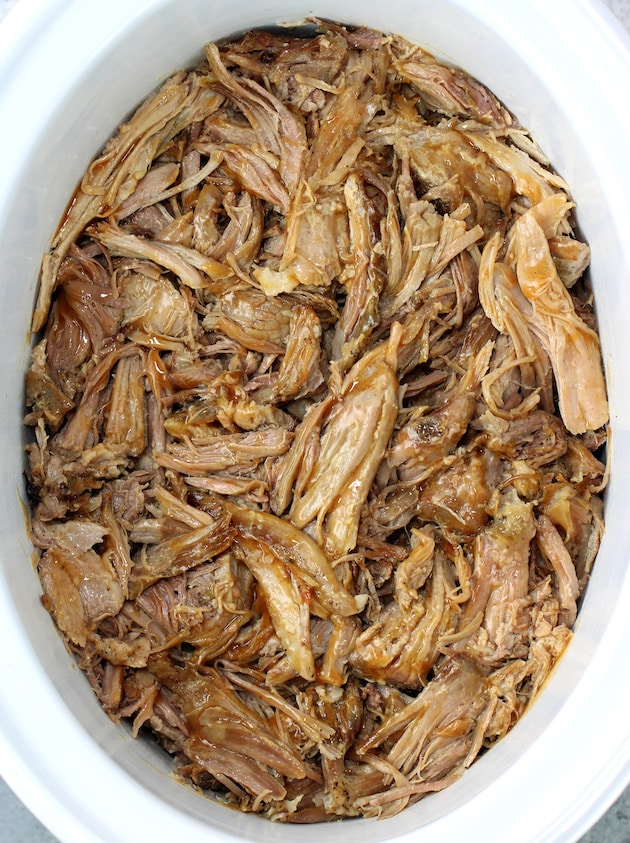
This slow cooker pulled pork shoulder is like a blank canvas, waiting for your seasoning of choice. Think carnitas, burritos, quesadillas, BBQ sandwiches, pork verde stew, pork ragu — the options are endless. I intentionally keep the seasoning minimal here so you can flavor the meat to your liking after it's cooked, for whatever meal you have in mind. (Jump to the Flavor Variations section below for my favorite ways to season it.)
I intentionally kept the seasonings at a minimum for this recipe. That way you can flavor it to your liking after it’s cooked for whatever purpose you have in mind.
What Cut of Meat to Use
This recipe starts with a 5-lb pork shoulder, but at the grocery store, that same general cut might be labeled pork shoulder, pork butt, Boston butt, picnic roast, picnic shoulder, or even picnic ham. That's a lot of names for what's really just a couple of cuts — here's how they're related, where they're interchangeable, and where they actually differ.
Pork Shoulder & Pork Butt
At most grocery stores, “pork shoulder” and “pork butt” refer to the same cut — the upper part of the front shoulder, well-marbled with fat, usually sold boneless or with a single small blade bone. You'll also see it labeled Boston butt, which is just another name for the same thing. Despite the name, it has nothing to do with the rear of the pig. If a package is labeled “pork shoulder roast,” “pork butt,” or “Boston butt,” this is what's inside, and it's my go-to for this recipe since the marbling keeps it moist through a long, slow cook.
Pork Picnic Roast
The one cut that's genuinely different is the pork picnic roast, also called picnic shoulder. It comes from just below the butt, closer to the front leg. It often still has the skin on, includes the leg bone, and has a more tapered, irregular shape than the butt. It's usually a little cheaper and works just as well for pulled pork — it just takes a bit more trimming since you may need to remove the skin and work around the bone. Some stores confusingly label this cut “picnic ham,” even though it isn't from the rear leg/ham at all.
Bone-In or Boneless?
Once you've settled on the cut, you'll usually see it sold both bone-in and boneless. I prefer bone-in — it tends to stay a little more moist during the long cook, and the bone itself adds flavor to the broth — but boneless works well too and can be easier to portion and shred evenly. Either one will get you tender, fall-apart pork.
At the store tip: if the label says “pork shoulder,” “pork butt,” or “Boston butt,” you're getting the cut I use for this recipe. If it says “picnic,” “picnic shoulder,” “picnic roast,” or “picnic ham,” you've got the leaner, bonier cut from lower on the leg — trim the skin first, but it'll still shred beautifully in the slow cooker. Either way, you're in good hands.
A Few Ingredient Notes
Before you start, here’s a quick rundown on the ingredients and why their important:
Salt and pepper: Intentionally minimal, so you can season the meat however you like after it’s cooked — see the Flavor Variations section below for a few of my favorite ways.
Chicken stock (or beef stock): Adds savory depth to the cooking liquid, which you’ll toss back with the shredded meat for moisture. Beef stock works too, and gives a richer, darker result if you’re leaning BBQ.
Onion and garlic: These build a flavor base in the braising liquid without steering the pork toward one cuisine, which is what keeps it a blank canvas for tacos, BBQ, or Italian dishes alike.
Ok, who’s done with pig anatomy class, and ready to get the details on making this tender juicy pulled pork? ME: 🙌
How to Make a Slow Cooker Pulled Pork Shoulder
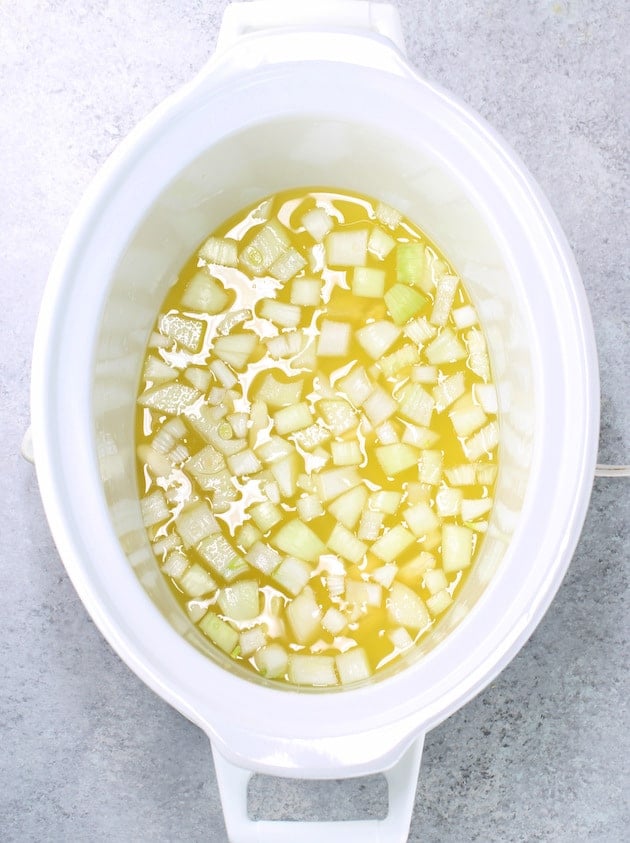
Add the chicken stock (or beef stock), chopped onions, and garlic to the slow cooker and turn it to the high heat setting.
Pro Tip: This gives the liquid a head start warming up before the pork goes in.
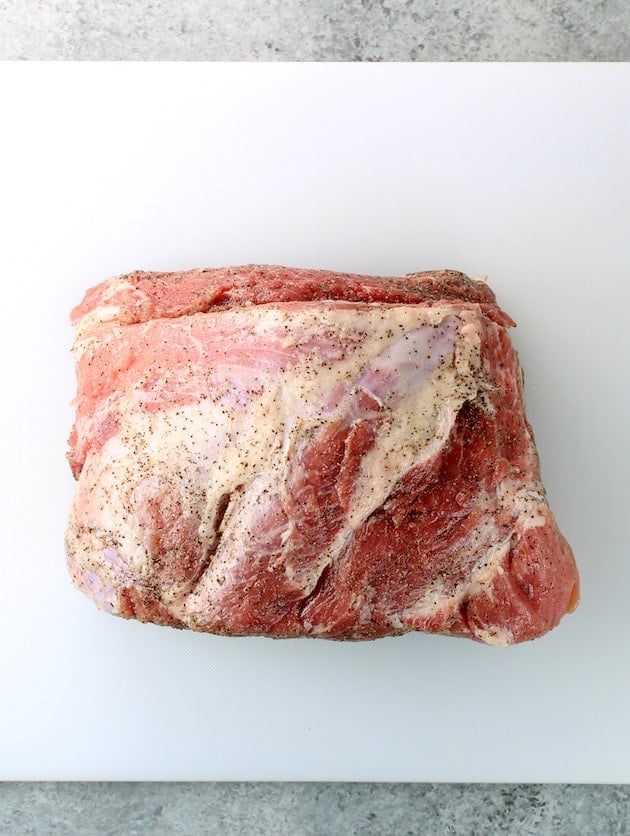
Remove the pork shoulder from the packaging and pat it dry with paper towels.
This is a preference thing... If there is a fat cap (a thick white piece of fat covering one side.) You can trim some of it off by using a serrated knife to cut between the fat and the meat. You can also cut away some of the other visible fat on the meat if desired.
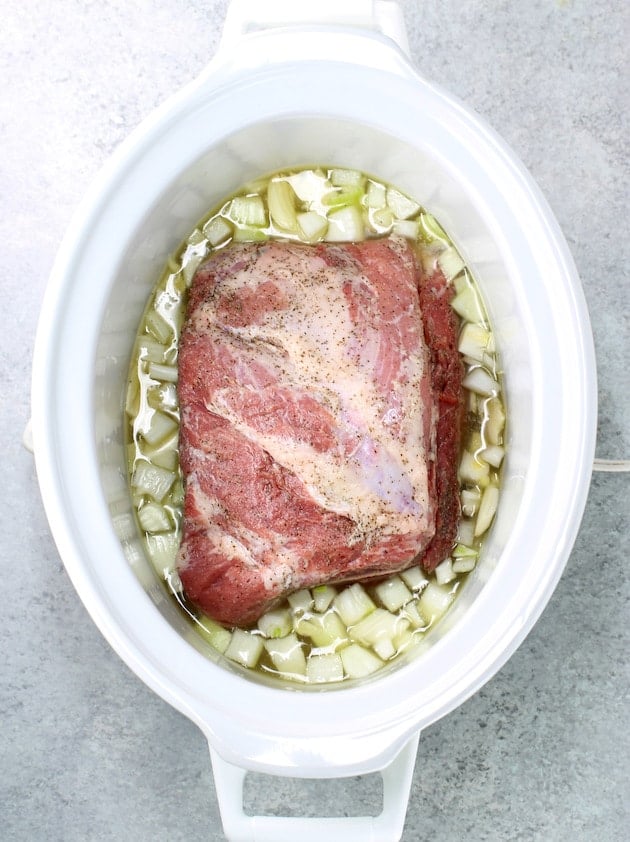
Sprinkle salt and pepper all over the outside of the meat, place it in the slow cooker with the onions and stock and cover with the lid. Turn the heat down to low and cook for 8 hours (or 5 hours on high).
Pro Tip: Resist lifting the lid to check on it — every peek lets out heat and can add up to 20 extra minutes of cook time.
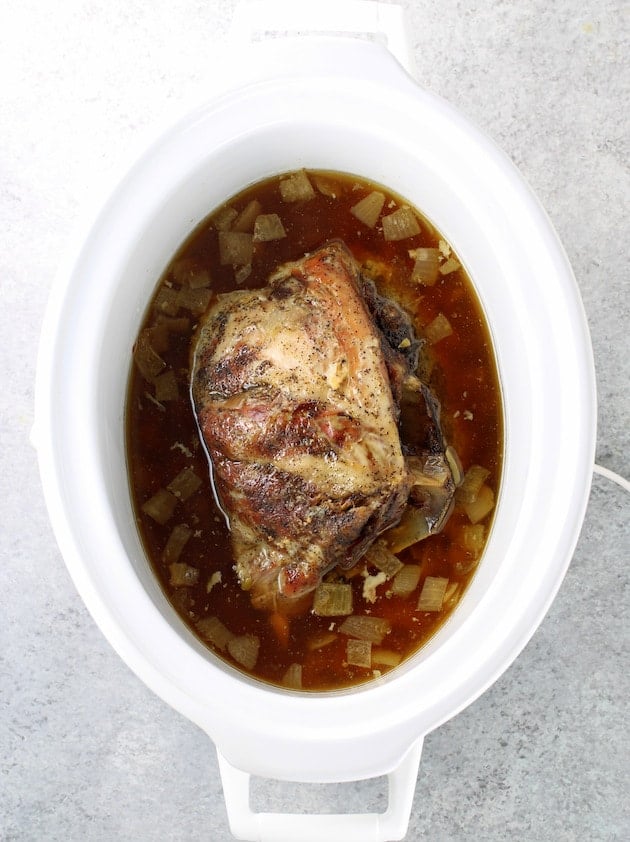
This slow cooker pulled pork shoulder recipe is done when the meat reaches at least 200°F internally and shreds easily with a fork.
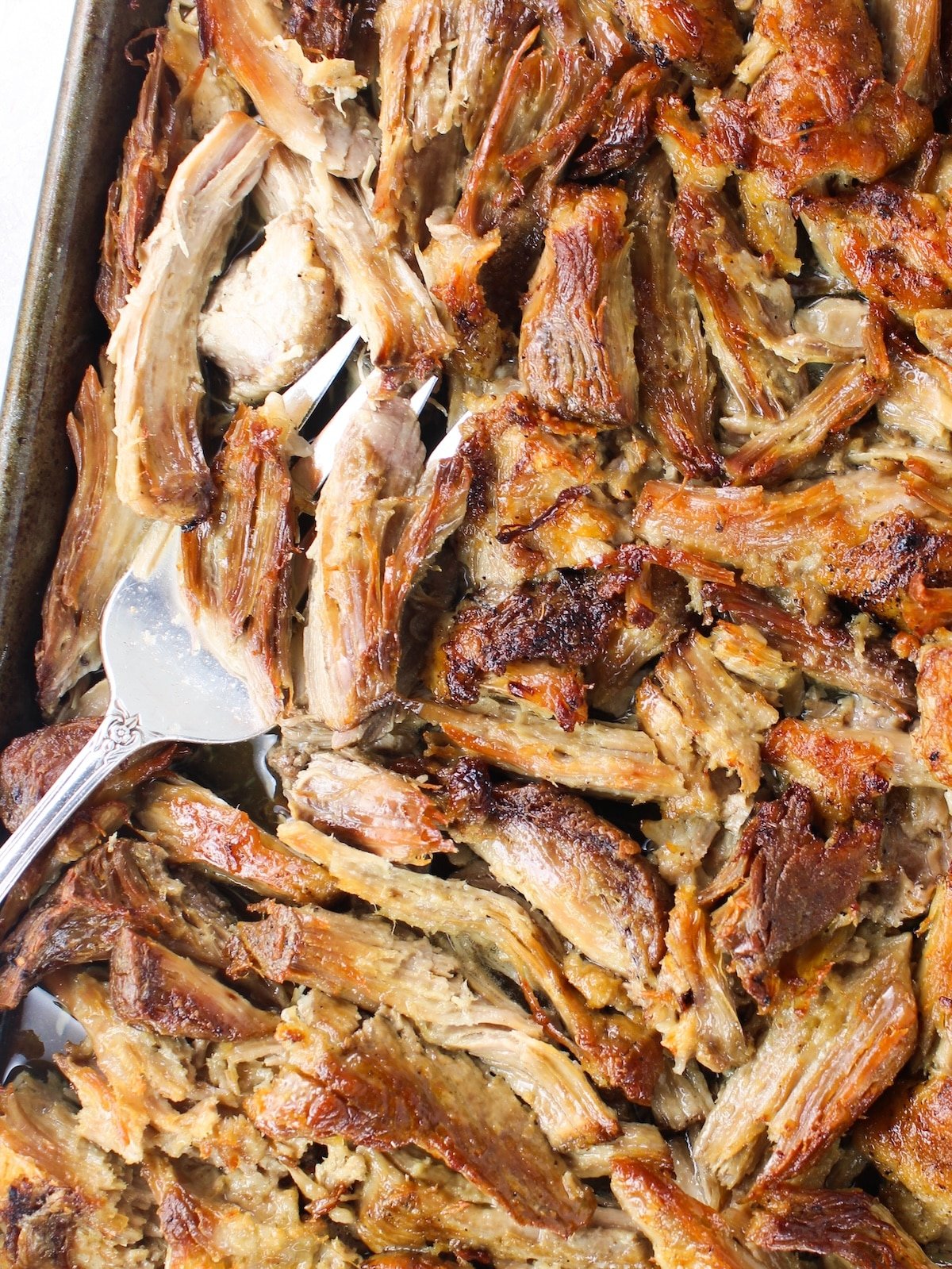
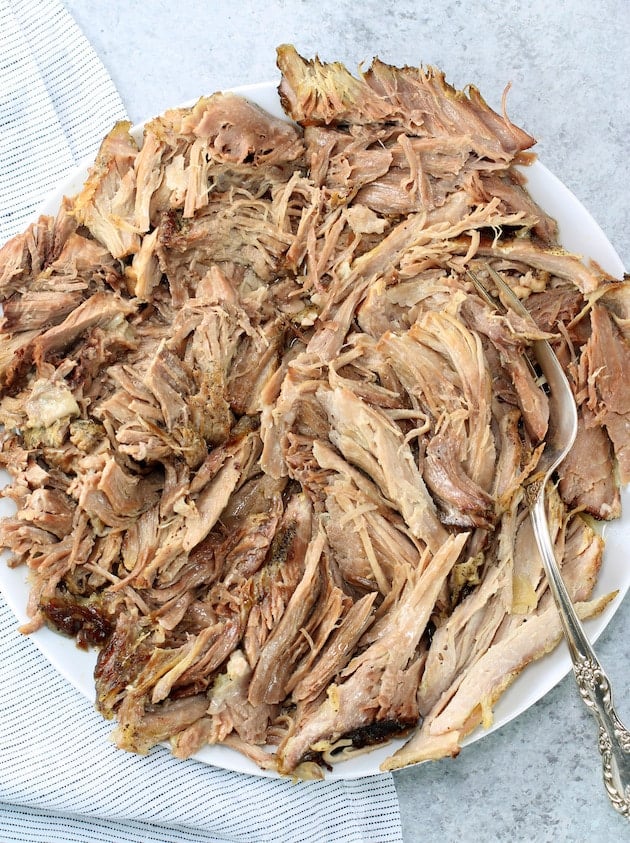
Turn the slow cooker off and transfer the pork to a platter. Let it rest for 15–20 minutes before shredding — this short rest makes for noticeably juicier pulled pork. Use two forks to shred the meat once it's cool enough to handle.
Next, pour the cooking liquid through a mesh strainer set over a bowl or glass measuring cup, you can either discard the strained onion and garlic or leave them in with the meat if you like the texture — totally a preference call.
If you see oily fat floating on the top of the liquid, you can remove it with a spoon or use a fat-separating measuring device to make it quick. This makes removing fat sooo easy. If you have the time and prefer a hands-off method? Refrigerate the broth until the fat solidifies on top, then scrape it off and throw it away.
Finally, toss the shredded meat with some of the de-fatted broth to keep it moist and flavorful, then season it however you would like, or freeze it to use in other recipes later.
Recipe Tips for Tender Pulled Pork
- Don't over-trim the fat. Leave a thin layer on the pork before cooking — it renders down and keeps the meat moist. You can always skim excess fat from the broth afterward.
- Let it rest before shredding. Fifteen to twenty minutes off the heat makes a real difference in juiciness of the meat.
- Go by texture, not just time. Pulled pork is ready when it shreds easily with almost no resistance from a fork — usually around 195–205°F internally.
- Resist lifting the lid. Every time you lift it, you lose heat and add cook time.
Storing and Freezing Pulled Pork
Store leftover pulled pork in an airtight container in the refrigerator for 3–4 days. For the best texture, store the meat with a little of its reserved broth spooned over it — it stays noticeably moister than pork stored dry.
Can you freeze pulled pork? Absolutely — it's one of my favorite things about this recipe. Freeze it in a freezer bag or airtight container for up to 3 months. Portion it into meal-sized bags first, press them flat before sealing (they'll thaw faster and stack neatly in the freezer), always add a few spoonfuls of broth to each bag to prevent freezer burn and keep the meat moist. Label with the date so you know what you're working with later.
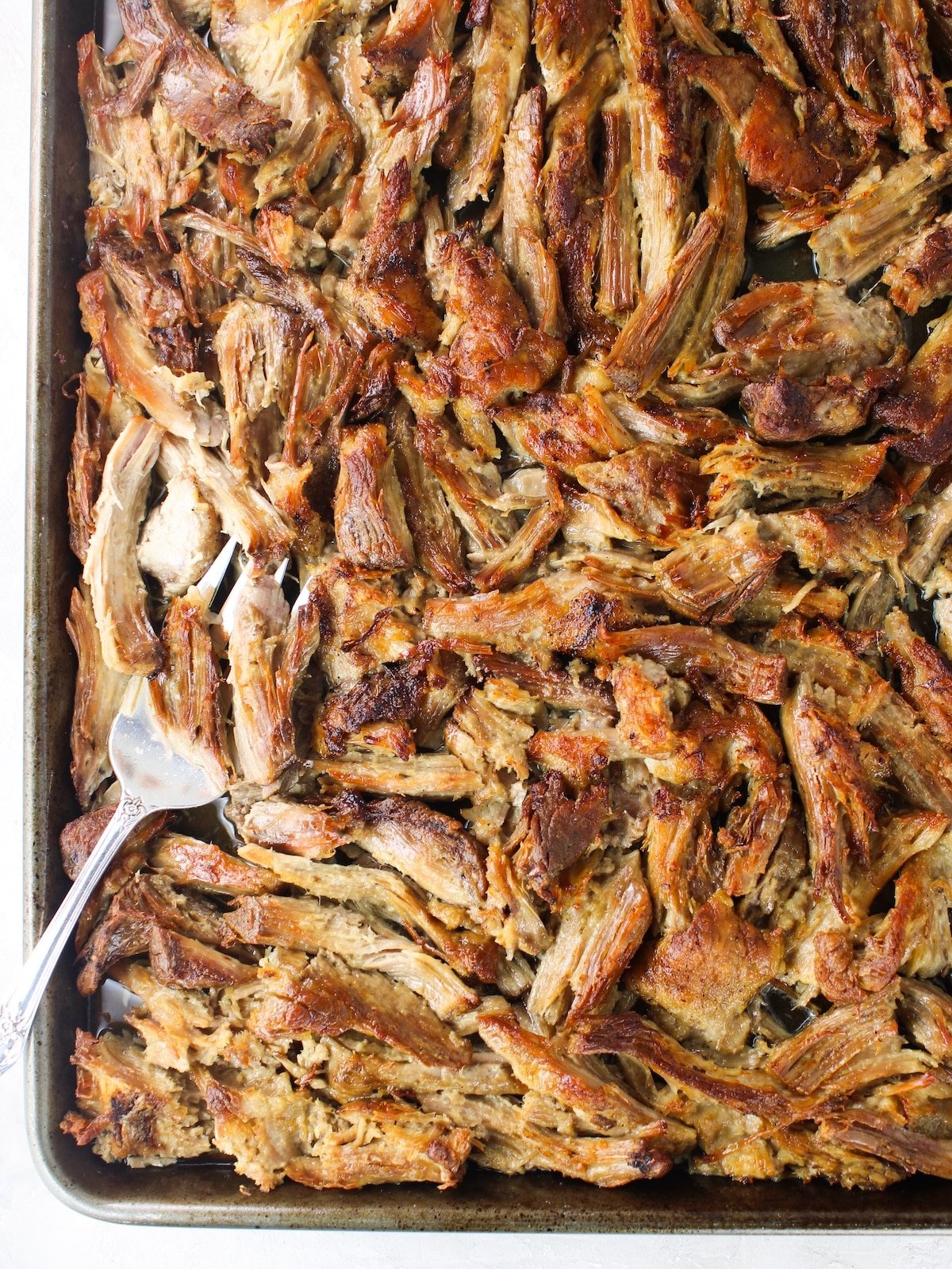
If you're using the pork for carnitas preheat the oven to 400 degrees. Evenly space the meat on a baking sheet and cook for 6-8 minutes.
Then turn the oven to broil and cook for 2-3 minutes or until the edges are crispy.
How to Reheat Pulled Pork Shoulder:
You can reheat the meat in several different ways.
- Reheat the pork in the oven: Preheat the oven to 400 degrees. Evenly space the meat on a baking sheet covered with tin foil for 6-8 minutes.
- Reheat & crisp the meat in the oven. Turn the oven to broil. Evenly space the meat on a baking sheet, and broil for 2-4 minutes or until the edges are crispy.
- You can also reheat the pork in the microwave although it won't be crispy.
- It can also be reheated in a skillet. Just add oil to a skillet and cook over medium-high heat. Cook the leftover pork for a few minutes until it's warmed through. Turn the heat up higher if you want to make it crispy.
Flavor Variations and Serving Suggestions
Because this recipe keeps the seasoning simple — just salt, pepper, onion, and garlic — it's an easy base to build on:
- BBQ-style: Toss the shredded pork with your favorite barbecue sauce and a splash of apple cider vinegar.
- Tex-Mex style (great for carnitas or tacos): Season with cumin, chili powder, and smoked paprika, then crisp under the broiler.
- Italian style: Simmer the shredded pork in marinara or a quick ragu sauce and serve over pasta.
- Salsa Verde Pork Stew: add the pork to a brothy tangy base, made from cooked tomatillos, roasted green chiles, onion, garlic, cilantro and spices.
What to make with pulled pork: once it's shredded, this pork is ready for Instant Pot Pork Carnitas, burritos, quesadillas, BBQ Pulled Pork Sliders, pork verde stew, Instant Pot Pork Ragu, loaded nachos, stuffed baked potatoes, pulled pork pizza, or piled onto a salad
Sides to Serve With It
Classic sides like coleslaw, sweet cornbread, and baked beans are always a good call alongside this pulled pork, and a few of my own recipes take the same easy, meal-prep-friendly approach.
My BBQ Baked Beans are a natural match if you're serving this barbecue-style, while a bright, crunchy Jalapeño Cilantro Mexican Corn Salad or Mexican Street Corn Salad helps balance out the richness of the meat and is perfect for taco Tuesday.
If you'd rather keep things cooler, a tangy Cucumber Salad or my Broccoli Salad with Grapes and Bacon both work well as make-ahead sides.
And for something heartier, Easy Mac & Cheese,Easy Mac and Cheese, Smashed Potatoes or my Smoky Salt and Vinegar Potato Salad round out the plate nicely.
Frequently Asked Questions
What's the difference between pork shoulder and pork butt?
They're both from the upper front leg/shoulder area of the pig and cook almost identically — pork butt sits slightly higher and has a bit more fat, but you can use them interchangeably in this recipe.
How long does it take to cook pork shoulder in a slow cooker?
About 8 hours on low, or 5 hours on high, until the meat reaches 195–205°F and shreds easily with a fork. Low and slow gives the most tender result.
How long should I slow cook pork per pound?
There's no strict per-pound formula since slow cookers vary, but as a rule of thumb, plan on roughly 90 minutes to 2 hours per pound on low. A 5-lb shoulder lands around 8 hours — go by internal temp and fork-tenderness, not the clock alone.
Can I use pork loin instead of pork shoulder?
Not recommended. Pork loin is much leaner and will turn dry, tough, and stringy over a long slow cook — the fat and connective tissue in pork shoulder (or butt) is exactly what breaks down into tender, shreddable meat.
Should pork shoulder be fat side up or down in the slow cooker?
Fat side up is the better default — as it renders, the fat naturally bastes the meat below it, keeping it moist.
Can you overcook pulled pork?
It's hard to dry it out in a slow cooker since the moist, covered environment protects it, but leaving it far past done can eventually make the texture mushy rather than pull-apart. Once it easily shreds at 195–205°F, it's ready to come out.
What should I serve with pulled pork?
Classic sides like potatoe salad, pasta salad, coleslaw, cornbread, baked beans, and mac and cheese all work well. Pile the meat onto a bun with your favorite BBQ sauce.
How much pulled pork do I need per person?
Plan on about ⅓ pound (5–6 ounces) of cooked pulled pork per person for sandwiches or tacos.
Can you freeze pulled pork?
Yes — freeze it in an airtight container or freezer bag for up to 3 months. Thaw overnight in the fridge before reheating.
How do you reheat pulled pork without drying it out?
Reheat gently with a splash of the reserved cooking broth, covered, in a 400°F oven for 6–8 minutes, or in a covered skillet over medium heat.
However You Season It...
...this slow cooker pulled pork shoulder is the kind of recipe that earns a permanent spot in your dinner rotation. Five simple ingredients and one long, hands-off cook get you a freezer stocked with tender, versatile meat that's ready for tacos, sandwiches, and everything in between. Give it a try this week, and let me know in the comments what you end up making with your batch!
I can't wait for you to try this pork shoulder recipe!
Enjoy my friend!
More Cozy Slow-Cooker Recipes to Try:
- Shredded Mexican Chicken (Instant Pot + Slow Cooker)
- Low Carb Slow Cooker Italian Beef
- Slow Cooker Beef Barbacoa
- Slow Cooker Corned Beef and Cabbage with Bacon
Make Ahead Slow Cooker Pulled Pork Shoulder
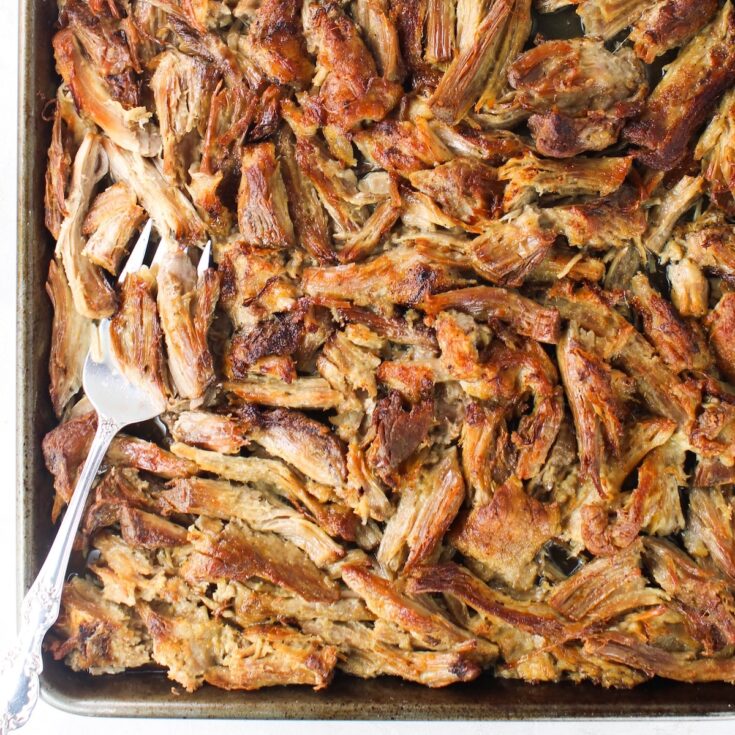
Super easy pulled pork recipe great for meal prep or easy weeknight dinners. Gluten-free, low-carb, and keto-friendly!
Ingredients
- 3 cups chicken (or beef stock)
- 1 large onion, roughly chopped
- 8 garlic cloves, smashed/skins removed, rough chopped
- 5 pound pork shoulder bone-in or boneless
- 1 tablespoon salt
- 1½ teaspoons ground black pepper
Instructions
- Add chicken stock, chopped onions and garlic to the slow cooker and turn it to the high heat setting with the lid on.
- Pat the pork roast dry with paper towels. If there is a fat cap (thick white piece of fat covering one side) carefully trim some of it off by using a serrated knife to cut between the fat and the meat.
- Sprinkle salt and pepper all over the outside of the meat and place it in the slow cooker, then cover with the lid. Turn the heat setting down to low and cook for 8 hours on low, or until the meat easily pulls apart with a fork. (You can also cook the pork on high for 5 hours.)
- When the pork is cooked and “shreddable,” turn the slow cooker off and transfer the pork to a platter. Let it rest for 15–20 minutes, then use two forks to shred the meat.
- Strain the fat and veggies from the cooking liquid, using a fine-mesh strainer over a bowl or glass measuring cup. Pour the liquid through the strainer and discard the solids left behind. (You can leave the veggies in the liquid if you prefer.)
- Remove any oily fat floating at the top of the liquid with a spoon or use a fat-separating measuring device.
- Toss the meat with some of the broth to add flavor and moisture, then use it as desired for your favorite pork recipes.
- If you're using the pork for carnitas preheat the oven to 400 degrees. Evenly space the meat on a baking sheet and cook for 6-8 minutes. Then turn the oven to broil and cook for 2-3 minutes or until the edges are crispy.
Notes
- If the roast is too large to fit in one piece, cut it into large chunks so it fits into your slow cooker.
- You can cook the pork roast on high to save some time... it will take around 5 hours.
- If you’re not in a hurry, another way to remove the fat is to refrigerate
the liquid until the fat solidifies and collects on top of the broth. Then scrape it off and throw it away.
Nutrition Information
Yield
20Serving Size
4 ouncesAmount Per Serving Calories 381Total Fat 27gSaturated Fat 10gTrans Fat 0gUnsaturated Fat 15gCholesterol 121mgSodium 409mgCarbohydrates 1gNet Carbohydrates 1gFiber 0gSugar 0gSugar Alcohols 0gProtein 31g
jcg
hi! 2 questions. can you leave the onions and garlic in?
and - can reheating in a slow cooker work or will that ruin the meat? i want to make ahead for a party, then have out while keeping warm for people to make sandwiches
thanks!
Holly Sander
You can definetly leave the onions and garlic in it. It's just a preference thing. I always add mine. About reheating... I would recommend reheating it before your guests arrive in the oven covered with tinfoil with some of the cooking liquid. While it's warming turn your slow cooker on low. Then before your guests arrive put the meat in the slow cooker and turn the heat down to warm. I hope that helps!
Andrew Fong
Fat is flavor. You don't have to remove so much of the fat. It is not bad for you in moderation. Fat is fuel - you paid for it, plants and animals spend a lot of energy and store it in fat - why throw it out? Saturated animal fat was much maligned in the past. Need to get past that.
Holly Sander
Hi Andrew, I love your passion for animal fat! You should know you're actually talking to a fat loving lady. As a 5 year old I would ONLY eat the fat off the pork chops my mom cooked. Literally, I would not eat the meat but asked everyone at the table for their fat. So, no need to sell me on consuming animal fat. But as you mentioned moderation is a good thing when it comes to fat as well as most things in life. Many people struggle with high cholesterol so I have to be mindful of that when I'm creating recipes. I leave it up to my readers to discern how much fat they keep and remove. Thanks for stopping by.
Erin
I agree. Fat provides flavor and keeps the meat moist while cooking. It is also essential for our bodies especially our brains.
Holly Sander
I think we're all in agreement on this one, Erin. Thanks for weighing in.
Cathy Warkentin
Do you need to cover the meat with tin foil when you reheat it?
Bryan
Hi Cathy I'd use two steps: cover with foil for the first step when you're heating at 400F for 6-8 minutes, then remove the foil before you turn the oven to broil to crisp up the meat. Enjoy! 🙂
Jessica
Why would you discard the onions and garlic? Delish....
Bryan
Hi Jessica, that's totally a texture preference! If you enjoy them then go for it! 🙂 - H&B
Pam
Hi Holly. This isn't a comment, it's a question. When u talk about draining the veggies from the pork, are u talking about the onions n the garlic? I can't wait 2 try this recipe! In the past, I've had pulled pork @ a birthday, but the meat n the sauce were much lighter in color. Do u happen 2 have a recipe that sounds like this? I'd b greatly appreciative. Thank u! Pam
Bryan
Hi Pam, yes the reference to straining the veggies is the onions and garlic. We're not familiar with a different pulled pork recipe that would result in lighter colored meat... but if you find one that you love please let us know! 🙂 H&B